IPD Procedure Interspinous Process Decompression
Interspinous Process Decompression (IPD) is a surgical procedure in which an implant is placed between two bones called spinous processes in the back of the spine. The implant is designed to keep the space between the spinous processes open, so that when standing upright the nerves in the back will not be pinched or cause pain. With the implant in place, it should not be necessary to bend forward to relive pain.
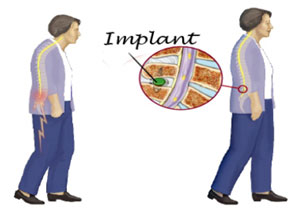
IPD offers several benefits compared to traditional surgery for lumbar spinal stenosis, including:
- the option of local anesthesia
- the potential to be an outpatient procedure
- usually no removal of bone or soft tissue, allowing for potentially faster recovery
- fully reversible procedure that does not limit any future non-surgical and surgical treatment options
- the implant can be removed
- does not create instability
- little blood loss
Each year, millions of seniors have restrictions of their activity due to the natural aging of the spine. Fortunately, this breakthrough technology has allowed patients to return to a quality of life where they can once again become active and enjoy recreational activities such as golf, tennis and water sports.
Due to the minimally invasive nature, there is faster recovery and a lower complication rate. This procedure may be an alternative to the more invasive procedures such as a complex laminectomy and fusion requiring rods and screws. This new procedure has lower risks when performed on senior patients and usually can be performed in one hour.
Most patients, who have undergone the procedure have seen immediate improvement in back, buttock and leg pain and have been able to return to significant activity within a week or two after the procedure. It does not require any postoperative bracing. Sutures are removed within 6-7 days and minor medication may be given for pain control.
What is Spinal Stenosis?
Spinal stenosis is a narrowing of the spine where nerves pass through.
Spinal stenosis is the gradual; result of aging and “wear and tear” on the spine from every day activities.
Degenerative or age-related changes in our bodies can lead to compression of nerves (pressure on the nerves that ma cause pain and/or damage)
What to Expect Before IPD Surgery
The best preparation for surgery is being sure that all of your questions are answered. You should also be sure to inform your physician of any health problems you may have or medications that you are taking before surgery.
Once you have been admitted to the hospital, you will be taken to a pre-op room and prepared for surgery. This may include instruction about the surgery, cleansing of your site, as well as instruction about the postoperative period. You may meet with the anesthesiologist to discuss your anesthesia.
You will then be taken to the operating room and anesthesia will be induced. Once the anesthetic has been successfully administered, you will be positioned on your belly for the surgery.
What to Expect After Surgery
After surgery you will wake up in the recovery room where your vital signs will be monitored and your immediate postoperative condition will be carefully watched. Most patients stay in the recovery room between on and three hours after surgery. Once the anesthesiologist feels that you are doing well, you will be returned to your room in the hospital.
It is normal for your incision wounds to be sore immediately after surgery.
The nursing staff will be checking to make sure that your vital signs are stable and that there is no problem with either the wound or nerve functions in your legs.
Most patients are discharged from the hospital the next day, but your physician and health care team will determine the best postoperative course for you, depending on your comfort and any other health problems you might have. Your physician will discuss with you any pain medications to take home as well as a prescribed program of activities. In general, the TLIF surgery results in quick recovery and return to normal activities.
Generally patients are seen again in the physician’s office about ten days to two weeks after surgery. If during that first week after surgery you have any questions or problems, you should call the office immediately.
Surgery Step 1
Incision and approach
Make a midline incision and expose affected spinal level
Surgery Step 2
Distract spinous process to determine appropriate size spacer.

Surgery Step 3
Distract spinous process to determine appropriate size spacer

Surgery Step 4
Bone Grafting
If possible, lightly decorticate the tip of the spinous process dorsal to the implant. Apply demineralized bone, crushed cancellous bone, or other osteoinductive agent on the dorsal and cranial surfaces of the implant an over the lamina and spinous process of the cranial vertebra.
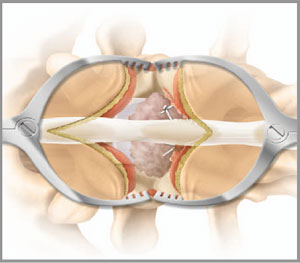
Surgery Step 5
Closure
Skin will be closed with suture. The height of areas where nerves pass is restored.

A National Practice
Dr. Eidelson sees patients from across the country for treatment of spinal stenosis and disc herniation. Most patients do NOT require surgery.
Call the Delray Beach office for information or to make appointment.